


I was standing on the sideline of a U11 basketball game when a coach yelled at my kid: “If you want to get a college scholarship, you need to take this seriously. Start now, or you’ll never make it to MBA.”
My kid was eleven.
I remember standing there, watching this coach—genuinely trying to help—apply pressure like it was oxygen. Like without the constant reminder of stakes, a fifth-grader wouldn’t understand the game.
That was the moment.
I realized I wasn’t just in a different country. I was in a completely different training culture. And somehow I had never seen it from the outside before.
Growing Up on the Other Side
In Finland, I trained from a young age. Running. Finnish baseball. Cross-country skiing. Swimming. We moved through sports seasonally, naturally, the way you move through weather.
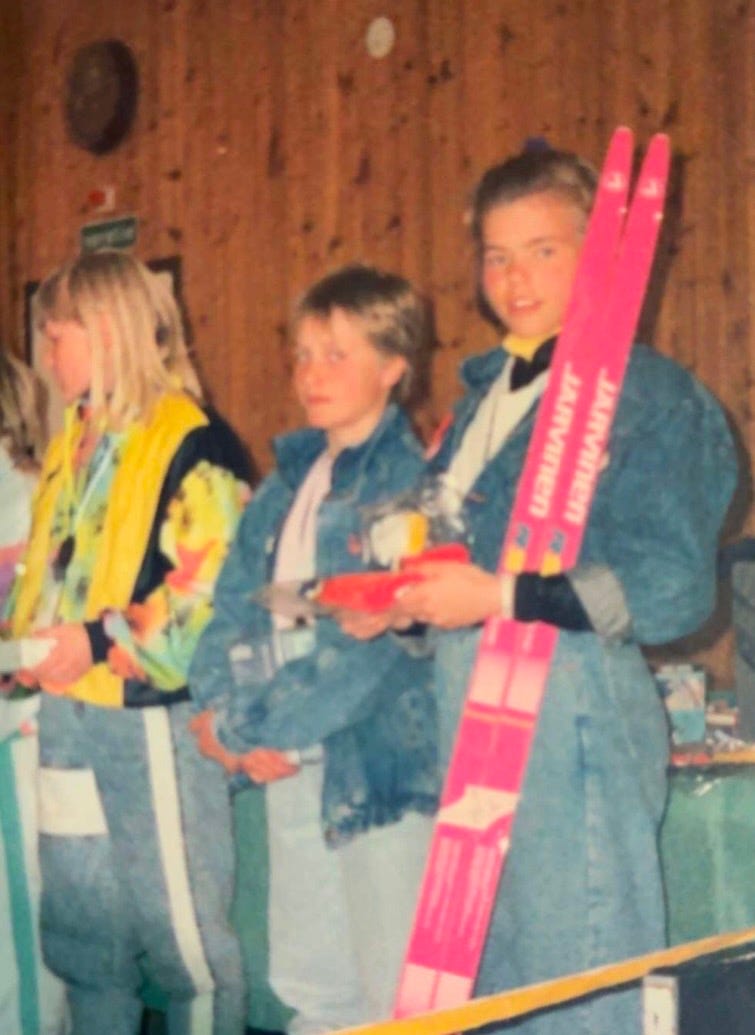
But here’s what I didn’t understand until I left: nobody was yelling about the future.
The coach didn’t say “you need to be perfect at 11 to make the elite team at 16 to make the national team at 20 to make money someday.” The stakes weren’t financial. The pressure wasn’t existential.
We trained because we loved it. We trained because our bodies knew how. We trained because in Finland, movement isn’t a pathway to escape your circumstances. It’s just how you live.
The training itself reflected this.
Easy runs were easy. I mean actually easy. Conversational pace. Sometimes 40 minutes, sometimes two hours, just moving through the forest at a pace where you could talk, notice things, be present. It wasn’t heroic. It wasn’t punishing.
Hard sessions existed. Threshold work. Hard intervals. But they were purposeful: maybe once a week, sometimes twice. Controlled. Not because we were lazy, but because there was this underlying understanding: you build fitness through volume and consistency. Not through suffering.
The recovery was real recovery. Not “active recovery” where you’re still pushing. Not “zone 2 if you want to be elite.” Just... rest, play, do something you enjoy.
Looking back, I realize I never heard a Finnish, or a Norwegian coach talk about “pushing through pain” or “no pain, no gain.” That mentality didn’t exist in our training culture. Pain was information. If something hurt, you either fixed it or you stopped.
I thought this was how everyone trained.
Then, years later, I moved to America.
The Shock
The first time I went to a kids’ track & field practice in Houston, I was genuinely unsettled.
Not because it was hard: I understood hard training. But because of the culture around it. The constant messaging about intensity. The valorization of suffering. The leaderboards. The comparison. The idea that if you weren’t destroying yourself, you weren’t doing it right.
I watched run practices where the easy pace was still... not easy. Every practice all-out.
I listened to conversations about training in ways I’d never heard in Norway.
“I can’t take a day off, I’ll lose fitness.”
“If it doesn’t hurt, I’m not working hard enough.”
“I need to suffer to earn my rest.”
These things were normal here. Baked into the culture. Taught from childhood.
And then, the “Norwegian Method” suddenly became trendy.
Everyone wanted to know the secret. And guess what most people have taken from it?
Drumroll…. Double threshold days!
LOL
Not what the Norwegian Method really is: intensity control, a lot of easy, zone 1 and zone 2 training. Train more at low intensity. Keep your easy days easy. Don’t obsess over intensity.
Double threshold days.
Articles. Podcasts. Coaches pivoting. It is everywhere.
I have a feeling that most people have not actually realized how much lower threshold work is done in Norway than in US. Threshold work is done below your lactate threshold. Honest question: Did you know that?
Threshold work is not a permission to go out and smash yourself. It is a very deliberate, controlled session. But I bet you didn’t notice because you’ve been brought up thinking the only way intensity is done right is if you feel smashed days after.
After following along the hype for a while now, it has dawned to me: The Norwegian Method isn’t revolutionary to me because I grew up in this system. This is just... how we trained.
The reason it is blowing up in America isn’t because it’s some exotic new science. It’s because it’s so radically different from what North American athletes have been taught since childhood.
The Pressure Problem
Here’s what I’ve come to understand: American training culture is built on scarcity and stakes.
Scholarships are expensive. Colleges are expensive. If you want to “make it, whatever that means, you need to start now. Prove yourself at 11. Dominate by 14. Get recruited by 16. Because if you don’t, there’s a line of other kids who will.
The training philosophy follows naturally from this: intensity=results=security.
More hard workouts. Faster times. Higher numbers. Better placement. Because each of those is a stepping stone to the next thing. The next level. The scholarship. The career. The financial stability.
So you teach kids to push. To compete. To be uncomfortable. To value the grind.
In Norway, there’s no scholarship culture. University is cheap. Kids can try soccer until they’re 16, then switch to climbing, then go back to running at 25. The stakes are completely different, so the training philosophy is completely different.
You don’t need to prove anything at 11. You have time. So the focus is on building a foundation that lasts. On sustainability. On actually enjoying the process.
This isn’t because Norwegians are smarter or better. It’s because the system doesn’t require early specialization and constant pressure to survive.
What That Sideline Moment Taught Me
When that coach was yelling about college scholarships and MBAs to an 11-year-old, he wasn’t being cruel.
He was responding to a system. He was trying to help a kid “make it” in a world where making it requires starting at age four and proving yourself relentlessly for the next 14 years.
But here’s what I know from living on both sides:
Kids trained differently in Norway aren’t less ambitious. They’re not lazier. They just trained without the constant existential pressure. And you know what? Many of them still went professional. Still made national teams. Still had incredible athletic careers.
They just didn’t burn out at 23. Or 14, like most American kids do.
They didn’t hate training by the time they got there at 16.
They didn’t have to rebuild their relationship with movement because they’d spent their whole childhood fighting against it.
Why This Matters Now
The “Norwegian Method” is trending because American athletes and coaches are finally asking: Is there another way?
And the answer is yes. There has been another way. For decades. On the other side of the Atlantic.
The question now is: can we actually change the system? Or is the pressure so baked into American sports culture: into scholarships, into college admissions, into the entire economic structure of youth athletics, that we’re stuck?
I’m learning the answer the hard way.
I’m a mom of three athletes now. And I’m actively pulling my kids back from the external pressure machine.
Not because I don’t want them to excel. But because I know what burnout looks like, and I’ve seen how fast it comes when you build a childhood around proving yourself.
I’m not letting them chase the spots on the “best teams” in town just because those teams exist. I’m pushing them to stay active, to play multiple sports, to move their bodies for the joy of it. To train like they have time.
Because they do.
This isn’t always popular. Other parents look confused when I don’t obsess over rankings and placements. Coaches sometimes pressure differently than I’d prefer. The system assumes you want what the system is selling.
But I’m trying to choose something else for my kids. It’s proven incredibly difficult. It's either the Elite Teams crushing kids, or recreational leagues without real structure or consistency.
Because I’ve lived both sides, and I know which one produces people who still love their sport at 25, or at 48.
The Norwegian Method isn’t revolutionary.
It’s just what happens when you trust that fitness builds over time. When you believe easy days are enough. When you’re not trying to prove anything at 11.
It’s what happens when you train like you have a whole life ahead of you.
Because your kids do.
How much pressure are you willing to accept for your kids/athletes?
Comment below.
MJ